Case study
Fairhurst Marine: a six-datasheet series and brochure for navigation buoys
Fairhurst Marine builds navigation buoys for harbours, estuaries and offshore sites. I designed a datasheet for each buoy in the range and an 8-page brochure that introduces the whole system.
- Marine navigation equipment
- United Kingdom
- Six 2-page datasheets, an 8-page brochure
The brief
Fairhurst needed a datasheet for each buoy model. Buyers include harbour authorities and marine contractors who compare models on hard numbers: diameter, weight, buoyancy, freeboard and mooring requirements.
They also needed a brochure to present the full range at a higher level, for first conversations and trade shows.
One template, six buoys
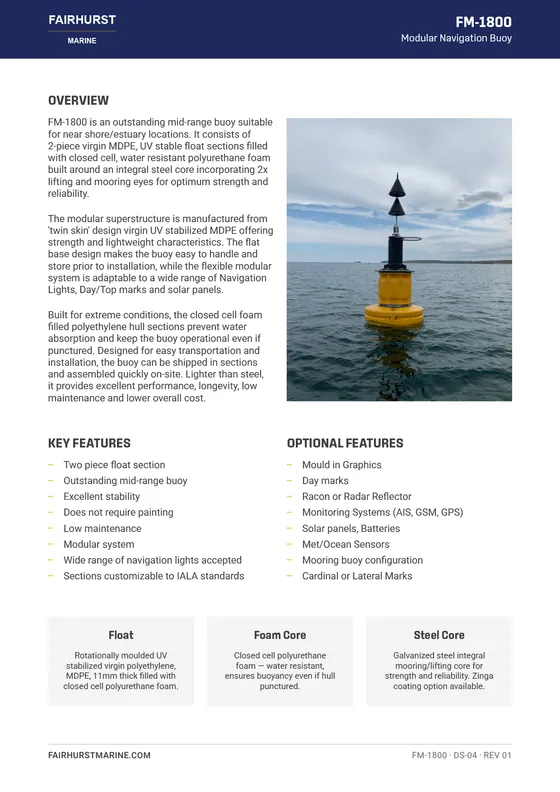
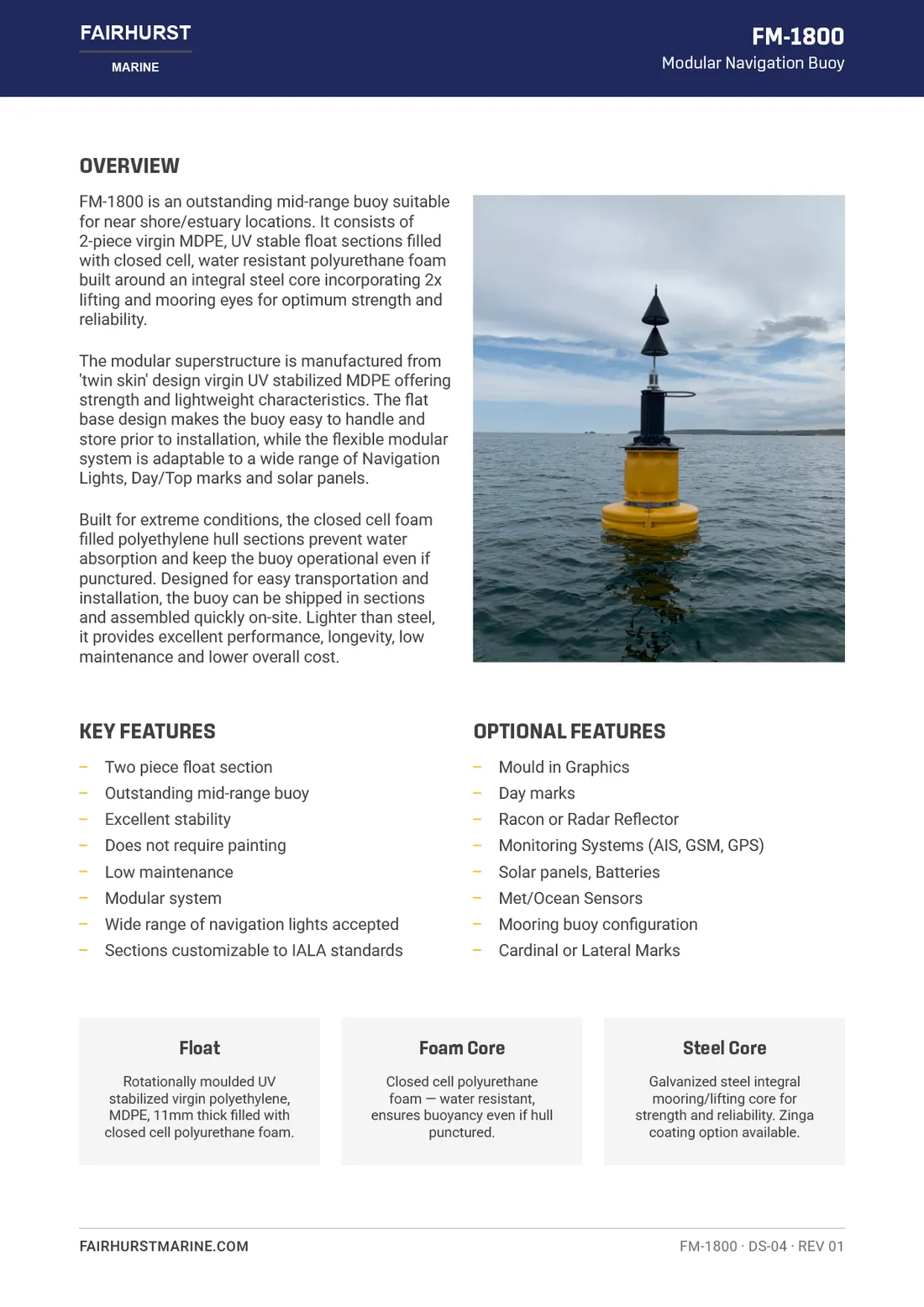
Every datasheet follows the same two-page structure. Page one answers "what is it and is it right for my site": the model name in the header, a written overview, a photo of the buoy in the water, key features next to optional features, and three short cards for the float, foam core and steel core.
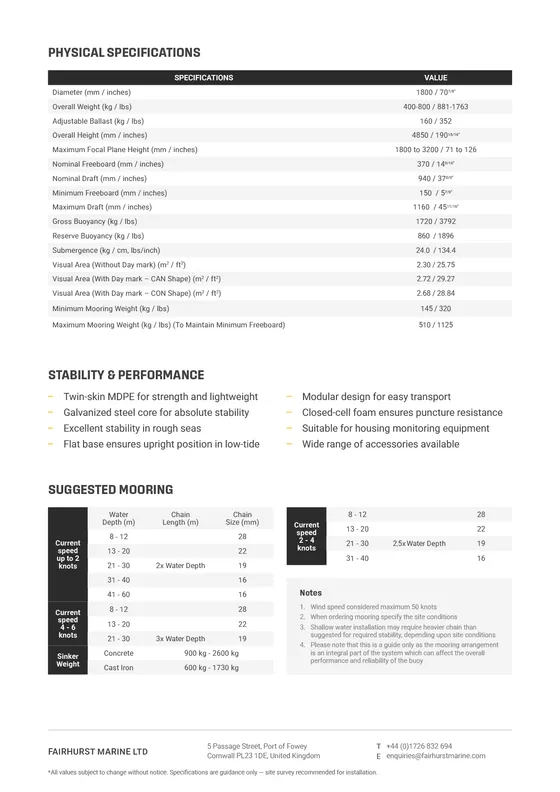
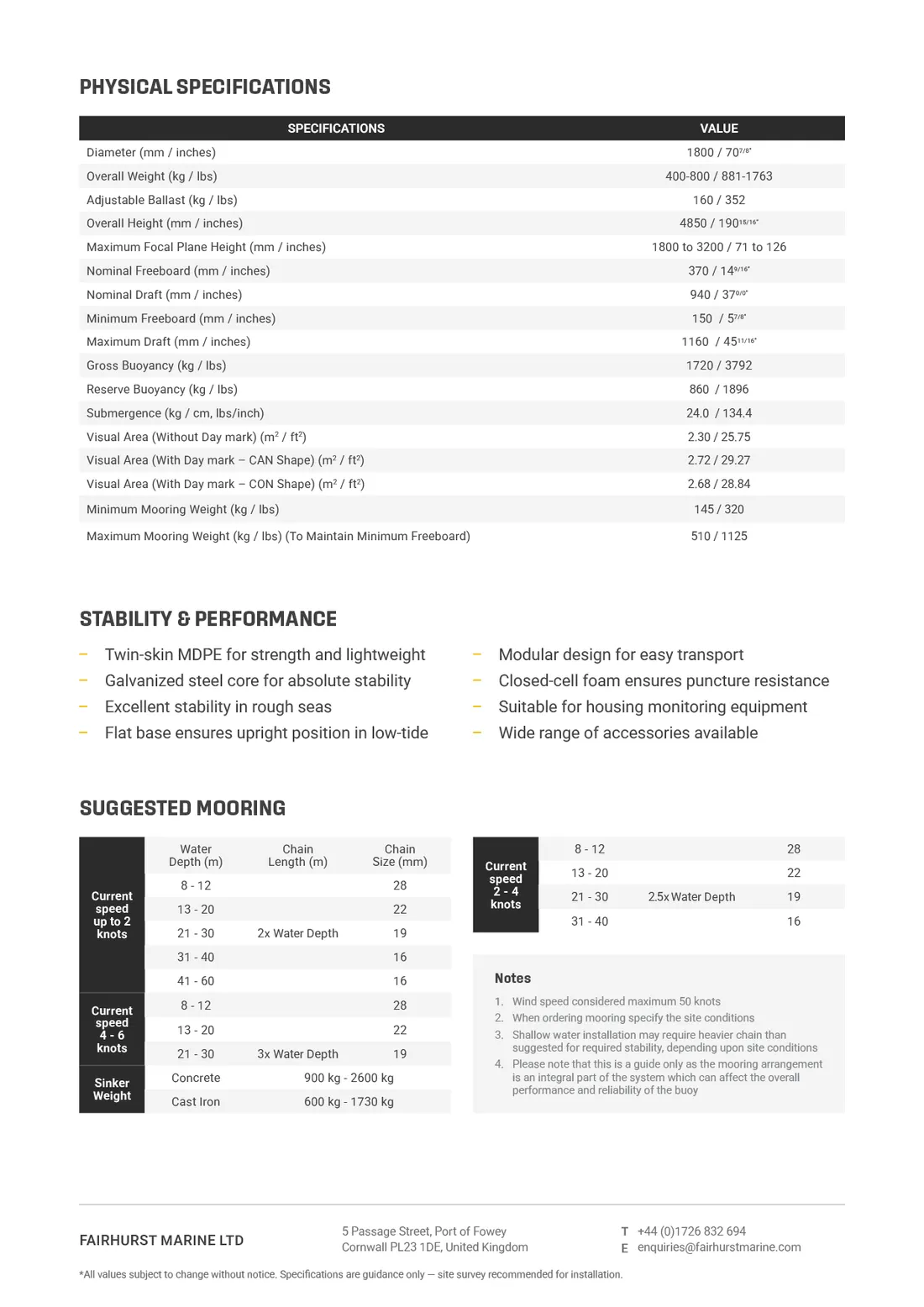
Page two is for the engineer: a full physical specification table, stability and performance notes, and a suggested mooring guide by current speed and water depth.
Details an engineer checks
Marine buyers work in both metric and imperial, so every value in the spec table carries both: millimetres and inches, kilograms and pounds. The mooring table groups chain sizes by current speed so the reader finds their row without reading the whole table.
Each datasheet carries a document code and revision number in the footer, so Fairhurst can update a single model without confusing customers about which version they have.
A brochure for the first conversation
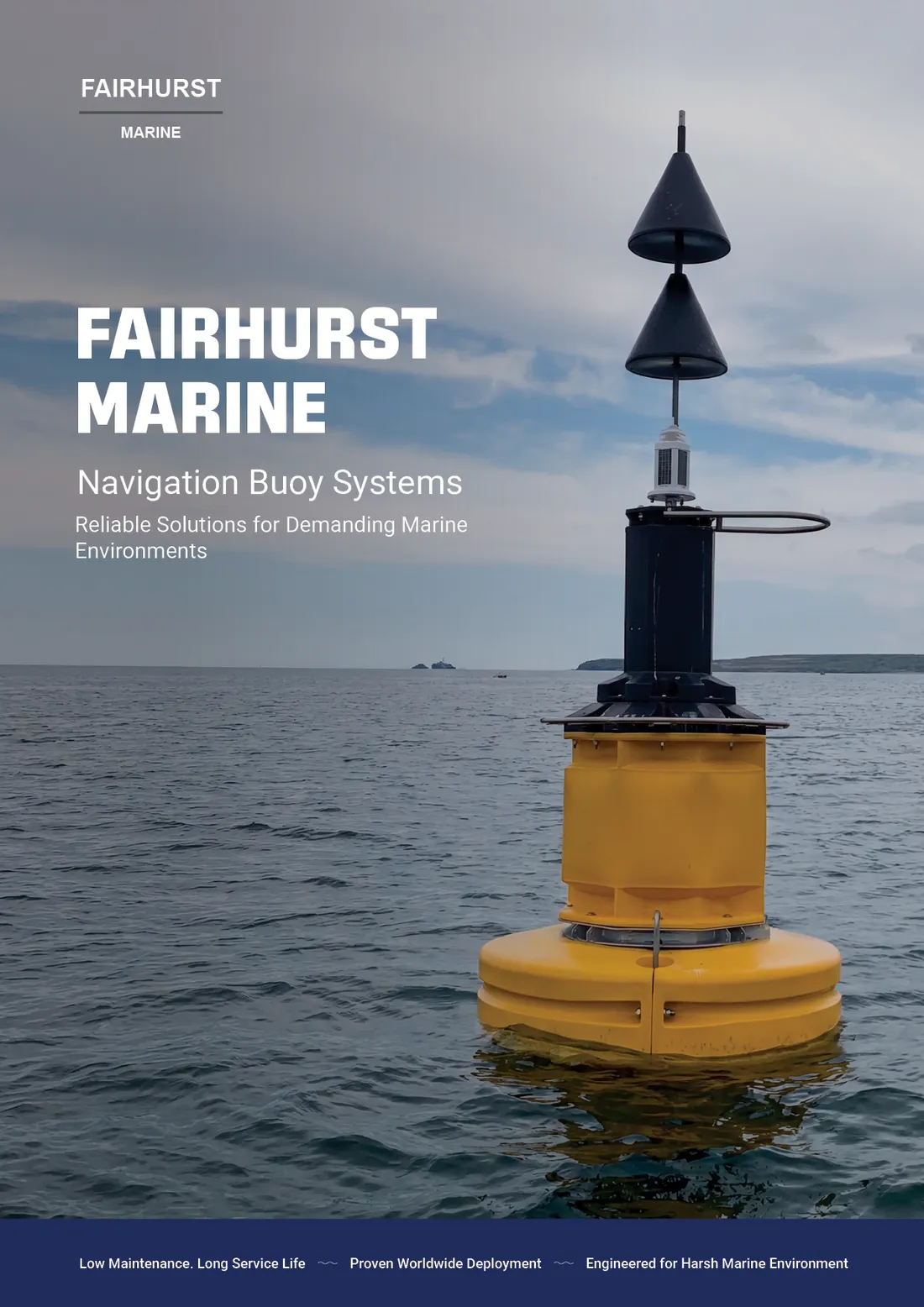
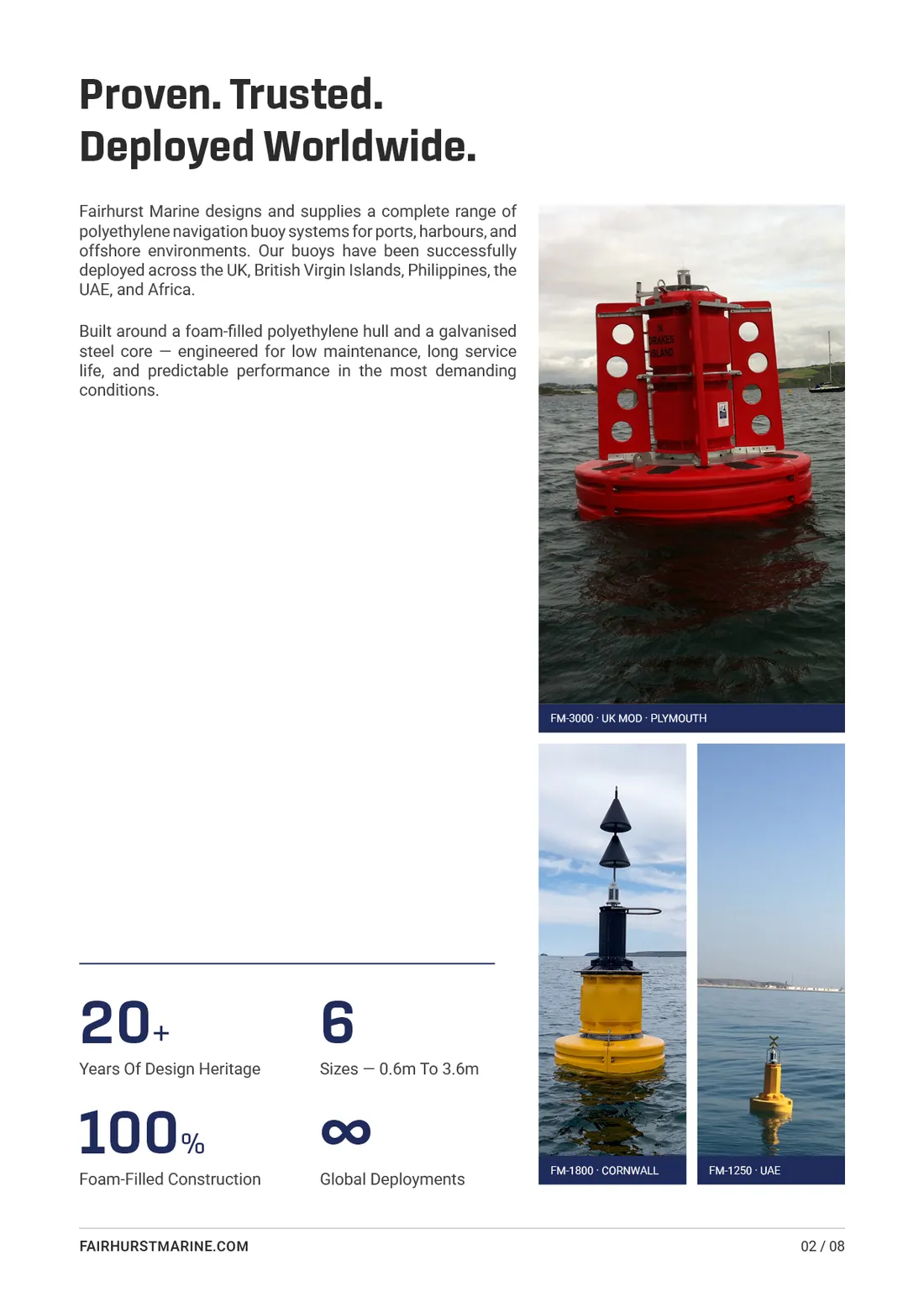
The 8-page brochure opens with a full-bleed photo of a buoy at sea and a single line of positioning. Inside, it walks through the range before pointing readers to the individual datasheets for the detail.